
A New Sheriff in Town
It was summer 2006 and as with most of U of T, there was a kind of hush in the halls of UTIAS. And with UTIAS nestled behind Environment Canada at the edge of a large conservation area, the hush was profound. There was an old school vibe in the long office-lined hallways. Some of the high-ceilinged labs had students working within while other once au courant labs were being used for storage, waiting patiently to be refurbished.
It seemed like business as usual, but things were about to change because a new Director had been appointed – Professor David Zingg. What made this appointment significant is that David Zingg was the very first Director of the University of Toronto Institute for Aerospace Studies who had not been originally hired by UTIAS founder Gordon N. Patterson (Director 1949 – 1974). In other words, David Zingg’s directorship was a changing of the guard.
NASA, it’s UTIAS calling...
In 1988, UTIAS launched a search for a professor working in an important new area called computational fluid dynamics (CFD). David Zingg had just completed his PhD in aerodynamics and numerical aerodynamics, which could be called the predecessors of CFD, so when then Director Rod Tennyson asked Zingg to apply, he did. However, Zingg believed that there was another candidate with a stronger knowledge of CFD, so he didn’t expect to be hired. In fact, he recently stated that if he had been director at the time, he would have hired the other person.
But Tennyson saw things in Zingg that he thought would make him a very good hire indeed: “he was a first-class graduate, very personable, well-liked by staff and students and quite articulate about his research plans. He also gave the impression that he knew where he wanted his research to go and was not concerned about his ability to achieve his goals.” So, Zingg was hired.
Once hired, Tennyson told Zingg that UTIAS would pay for him to go somewhere for the summer to learn more about CFD. In a move that would come to be emblematic for Zingg, he reached for the top. Yup, you guessed it, he wanted to go to NASA…but did NASA want him?
As Zingg says, it was easy to be naïve in the days before the internet was in full swing, so he wrote three snail mail letters to folks at NASA saying that he would pay his own way to come for a visit of 4 months to learn about CFD. One of these letters landed on the desk of a Branch Chief who, unbeknownst to Zingg, just happened to be a CFD legend.
In 1988, Harvard (Harv) Lomax, a pioneer in the field of CFD, was well into his 50-year career at NASA. As Zingg later learned from Lomax’s Assistant Branch Chief Dr Tom Pulliam, when Harv opened the letter, he called out, “Hey, have you ever heard of a guy named David Zingg?” Of course, Pulliam said no, but Lomax said yes to Zingg and shortly thereafter Zingg was California bound.
At that time there were many famous people at NASA Ames, and Zingg spent his summer “simply going around the branch asking questions and learning about their approach to CFD.” Zingg never did find out exactly why Harv Lomax said yes to him, but by the end of that summer, he must have greatly impressed the legendary Lomax because Lomax asked him if he’d like to come back the next year – this time on NASA’s dime. Zingg not only returned the following year supported by NASA, but NASA continued to bring him back year after year after year.
Meanwhile, back at UTIAS, Tennyson reports that Zingg was a talented lecturer who attracted graduate students eager to work in the emerging field of CFD. This early momentum set the tone for what became a distinguished research career. Over time, David Zingg earned a reputation as a highly respected figure in CFD, supervising students who went on to do impressive work at leading organizations including (in alphabetical order) Amazon, Ansys, Autodesk, Bombardier, de Havilland, GE Global, GE Vernova, Gulfstream, NASA, P&WC, Price Waterhouse Cooper, as professors at universities around the world, and even a graduate who is working in England at Atlassian Williams Racing on the design team for one of the world’s leading Formula 1 racing cars!
Zingg’s role at NASA evolved over the years from a junior to a senior one that includes teaching short courses, giving seminars, and participating in many research discussions. Ultimately, Lomax invited Zingg to join him and Pulliam in co-authoring the seminal CFD graduate primer Fundamentals of Computational Fluid Dynamics. And after Harv Lomax died, Zingg and Pulliam went on to publish a second CFD textbook Fundamental Algorithms in Computational Fluid Dynamics.
All in all, it’s a good thing David Zingg wasn’t making the decision about whether to hire himself!

Professor and Director in the making, David Zingg (right), with fellow grad student and close buddy Ted Darcie (left) and John Potjewyd (circa 1981)
Glory Days 1949 – 1974
Professor Ömer Gülder was a senior scientist with NRC when UTIAS hired him as a full professor in 2001. He believes that when David Zingg became Director in 2006, Zingg’s vision was to bring UTIAS back to its previous glory days when founder Gordon N. Patterson was at the helm.
So, what did those “glory days” look like? Well, the University of Toronto Institute of Aerophysics (UTIA), as it was originally known, was the result of a negotiation between Dr Gordon N Patterson and then U of T president Dr Sidney Smith. It was not just a brand-new U of T entity, it was the birth of aerospace research in Canada. The success of this negotiation was a combination of Patterson being a world-renowned researcher coupled with timing.
It is no coincidence that the founding and flourishing of UTIA/UTIAS took place during the post WWII years of the Defence Research Board of Canada (DRB) (1947 to 1977). We know from the many newspaper articles that documented the opening and growth of UTIA/UTIAS that the institute was heavily funded by the DRB. In fact, in a 1949 Telegram article on the founding of the institute, Dr OM Solandt, Chairman of the DRB, is quoted, “the primary purpose of the Toronto laboratory [UTIA] will be training of aerodynamicists for Canadian industry, the National Research Council and Defence Research Board and would be available for applied research on supersonic aircraft, guided missiles and the ballistics of projectiles.” (You can find this article on The UTIAS Chronicles tab on our website.)
Urban legend has it that UTIAS’s budget was bigger than the rest of U of T combined. True? Who knows, but it can be safely assumed that Patterson had, at least, one of the largest budgets at U of T.
Patterson was also in charge when Toronto, Canada, and the world for that matter, were much smaller places. McLuhan’s “global village” was a theory, personal computers and cell phones had yet to be invented, and social media did not exist. People read newspapers, magazines, journals, and these publications were eager for stories of interest for their readers, stories that did not get lost amongst billions of other articles vying for everyone’s attention. And, Patterson had a secret PR weapon, Alberta, his unpaid “executive wife” who, according to Professor Emeritus James Gottlieb, worked tirelessly promoting all the fascinating research stories coming out of UTIAS. Testament to her success are the very impressive press clipping binders that she created to document UTIA/UTIAS’s very impressive first twenty-five years.
All of this leads to the very important fact that, as founder, Patterson had the privilege of a large budget to erect a building designed by a leading mid-century modern architect and to equip it with state-of-the-art facilities. He also assembled a top-notch group of professors to staff the new institute and, thereby, to formulate the direction of UTIA/UTIAS.
When we think of “glory days,” it begs the question: what defines glory days? In this case, it was the dynamic environment of building something new and exciting. This was a privilege afforded no succeeding director – until 2006 when Professor David Zingg took the helm and began the rebuilding of UTIAS.
The New Glory Days 2006 – 2016
In 2006, as Director Tony Haasz was finishing his ten-year term, Professor Peter Stangeby, one of the most senior faculty members at UTIAS, went to David Zingg’s office with a question: the faculty wanted to nominate him for Director. Would he be interested? Zingg, taken somewhat by surprise, said that yes, he would consider it.
After Stangeby left, Zingg wondered what he had just agreed to. Becoming Director would be life-changing, and he was still raising his family. But the more he reflected, the more he warmed to the idea. The irony was that he was being nominated by some of the very people he would eventually be called upon to replace as they retired. Zingg accepted the nomination and, ultimately, the Directorship. He had committed to leading the rebirth of UTIAS. Zingg would hire new professors and rebuild those dormant labs into 21st century, state-of-the-art research facilities that would attract more students and reshape the world for tomorrow. And Zingg was up to the task.
“To me, UTIAS is a national treasure, and it is crucial that UTIAS's reputation reflects this, as our ability to attract outstanding faculty and students depends strongly on our reputation. Hence, it was very important to me that UTIAS's reputation, both national and international, would increase during my two terms.” — David Zingg
UTIAS was certainly not unknown internationally in 2006. In fact, an external review completed that year stated that “UTIAS is a world-class aerospace department…without doubt the top aerospace department in Canada.” However, 2006 also marked a revolutionary moment in communications with the introduction of broadband internet access, advances in web design, the launch of Twitter, and the rapid expansion of other social media platforms. These were quickly followed with the 2007 release of the first iPhone which further transformed the communications landscape.
Recognizing these changes, Zingg understood that UTIAS needed a communications role to navigate this fast-evolving environment, and he facilitated the creation of such a role after becoming Director.
Communications, however, was neither the only nor the most important strategy Zingg employed to enhance UTIAS’s reputation. He recognized that, as in earlier years, UTIAS’s standing was best advanced through excellence in research and teaching. This strong foundation would allow UTIAS’s reputation to grow organically, carried forward by its students as ambassadors and reinforced through a prominent presence at international conferences and in leading journals.
Strengthening communications was therefore an important complement to this core mission, not only to increase UTIAS’s profile, but also to publicize faculty positions as they became available. With retirements anticipated, Zingg knew he would have several hires to make. What he did not know was that he would be the first Director since Patterson to hire nine new professors during his ten years as Director.
Zingg understood that one of the most significant impacts a director can have is through faculty hiring, and so, reflecting his belief in “collective initiatives,” one of his first actions as Director was to strike a Strategic Research Committee. He invited a group of six faculty members to identify what they saw as the most promising research areas.
Zingg recalls the process as both fun and interactive. When the committee submitted its report, he played devil’s advocate, responding with a long list of questions, and the group did something almost unheard of – they revised their report. From this revision, they developed a blueprint that would serve as a starting point. However, Zingg did not view this blueprint as fixed. His priority was always to hire the most talented candidate, which meant allowing hiring committees to respond to developments in the field rather than adhere to decisions made years earlier.
Striving for the best was uppermost in Zingg’s mind when in 2006, he made the first of what would be his nine hires.
Robotics: Birth and Rebirth
When NASA proposed the Shuttle Remote Manipulator System (SRMS) for the Space Shuttle program, US scientists told NASA that it would require six degrees of freedom to do its job. They then told NASA that it was not possible to achieve six degrees of freedom in a flexible, light-weight arm that was orbiting the earth and not fixed to the ground.
Undeterred, Canada took on the challenge of creating the SRMS as its contribution to the space program. Luckily for Canada, in 1974 SPAR Aerospace asked UTIAS professor Peter Hughes to work on the SRMS. Hughes ultimately developed a completely new approach to the dynamics of robotic arms using elastic links, in which “each joint had six degrees of freedom, and the arm had six links so that it could grab anything from any angle and move it anywhere."
The algebraic language of Hughes's mathematical model was so complex that the notation was considered a contribution in its own right. Moreover, his dynamics analysis was used to design both the Canadarm and the associated simulators on which the first astronauts were trained (find out what Hughes’s pivotal “aha!” moment was that made the Canadarm possible).
This achievement placed UTIAS at the heart of what NASA recognized as “the first space robotics of any size...it was a brand-new design that no one had ever done before.” In effect, UTIAS was the international birthplace of space robotics.
Just as Tennyson had focused in 1988 on introducing the important new area of CFD, with his hiring of Professor Tim Barfoot in 2006, Zingg doubled the robotics professors at UTIAS and began a robotics rebirth that would ultimately have a significant impact on the institute.
Barfoot, who earned his PhD at UTIAS under the supervision of Professor Gabriele D’Eleuterio, was an academic “grandson” of Professor Peter Hughes. After graduating, Barfoot went on to work in space robotics at MDA (formerly SPAR Aerospace), home of the Canadarm – impressive bona fides by any measure.
Barfoot recalls that in his first year as a professor at UTIAS, he asked Zingg how many papers he would need to publish for tenure, which was five years down the road. Zingg replied, “ten”. When Barfoot later reported to Zingg on his progress with the ten papers, Zingg responded, “Ten? I think I said fifteen.” Next time, Zingg said twenty. When Zingg’s number reached twenty-five, Barfoot started hiding from him.
By the time Barfoot’s tenure review rolled around, he worried he might not make it because he had published only twenty-four papers, one short of Zingg’s magic twenty-five. In hindsight, Barfoot recognized that Zingg had pushed him just hard enough to excel without burning out. In the end, Barfoot’s twenty-four papers far exceeded what most profs have going for tenure, a feat Barfoot does not regret because it really kick-started his career.
As a professor, Barfoot brought his space robotics expertise back to UTIAS and, in his early years, embarked on many memorable adventures. These included taking students to Devon Island, or “Mars on Earth”, in Nunavut, for robotics testing in the Haughton impact crater, and learning to shoot a rifle for protection against bears when he and his students were dropped by helicopter into the wilds of northern Labrador. Learn more about Professor Tim Barfoot’s adventures and amazing career.
As time progressed, Barfoot observed that space robotics was no longer thriving in Canada, while terrestrial areas of robotics were becoming increasingly important. So, Barfoot pivoted to other areas of robotics, notably self-driving cars, and made Zingg aware of his shift in focus.
Armed with Barfoot’s insight, Zingg adjusted his strategic direction and hired two additional robotics professors, once again doubling the number of robotics faculty at UTIAS. Professor Jim Davis, who was Associate Chair of Engineering Science at the time, recently described this decision as UTIAS’s most important change in the past 30 years, calling it a significant policy shift that helped stabilize finances and increase student enrollment in the subsequently established, and UTIAS run, Robotics Major in Engineering Science. Davis added that the robotics major not only attracted many students within Engineering Science but ultimately also drew a larger number of graduate students to UTIAS.
It made sense to Zingg to bring an emphasis on robotics back to UTIAS, home of the Canadarm. Robotics research thrived, with the UTIAS grounds serving as ideal testing terrain. And, robotics continues to thrive, including a pivot back to space robotics and the addition of two more robotics professors added under Professor Chris Damaren, who succeeded Zingg as Director of UTIAS.

ROC6 rover with a stereo camera and lidar sensors preparing to be tested in the Canadian High Arctic (circa 2008) Photo by Tim Barfoot
Bottom Up
“UTIAS's success, including its ability to enable its students to thrive, is to a large degree driven by its faculty. Therefore, it was a high priority of mine to do what I could to enable faculty to succeed, for example by providing funding for PhD students and other support as needed. This was particularly true for new hires, who were given light teaching loads, reasonably large start-up funding, and excellent mentorship.” — David Zingg
While Patterson’s budgetary fortune did not shine upon Zingg in 2006, or for that matter, at any time during his tenure, Zingg based his decisions on academic priorities rather than “narrow budgetary considerations”. Zingg acknowledges that financial constraints were a reality, but he sought to ensure that UTIAS professors operated on a level playing field with their counterparts across the Faculty of Applied Science and Engineering, including with respect to research support and teaching loads.
Professor Chris Damaren, who succeeded Zingg as the UTIAS Director, describes Zingg as a straightforward, no‑nonsense leader who moved from point A to point B with clarity and efficiency. Damaren especially appreciated this quality in Zingg’s approach to decision‑making and day‑to‑day responsibilities. He notes his appreciation for Zingg’s fair and consistent approach to course assignments, which emphasized transparency and equity for all involved.
Joaquim Martins, now the Pauline M. Sherman Collegiate Professor of Aerospace Engineering at the University of Michigan, joined UTIAS as a professor in 2002 after earning his graduate degrees at Imperial College London and Stanford University. Although Zingg was not Director at the time, Martins recalls being struck by Zingg’s exceptional efficiency and focus. Zingg simply got things done; he answered emails promptly and advanced projects without fuss, often prompting Martins to wonder how he might emulate that level of effectiveness.
Martins also greatly valued Zingg’s persistence, especially on projects they worked on together. In one case, Zingg served as the Principal Investigator and the driving force behind securing funding. Despite numerous obstacles including delays, complications, and periods of industry unresponsiveness, Zingg never gave up. Martins admits that at times he felt that the effort was hopeless and he was ready to give up, but Zingg’s determination carried the project through to success.
As a mentor, Zingg primarily led by example. Martins recalls how Zingg’s approach to problems and his ability to ask incisive questions during doctoral examinations, often ones Martins had not considered, were deeply inspiring. He learned a great deal simply by observing how Zingg thought and led. Martins concludes that Zingg’s leadership, through workshops and numerous other interactions, had a profoundly positive impact on him.
Zingg’s mentorship of new faculty continued when he became Director. Professor Tim Barfoot believes Zingg’s greatest impact came from hiring strong researchers and helping them thrive, a quality that made him an exceptional leader. Barfoot describes him as a rare director who genuinely invested in the success of junior faculty. He was supportive, encouraging, perceptive in recognizing potential, and proactive in advocating for them with potential funders.
Professor Alis Ekmekci echoes this sentiment, recalling how Zingg did everything he could to support her and help her establish a successful research program, including offering feedback on her early funding proposals. Shortly after Ekmekci joined UTIAS, Zingg supported a trip to Bath University to strengthen her international collaborations in experimental fluid dynamics. And he introduced her to key industrial stakeholders, helping to initiate new industry partnerships for her research.
Professor Masayuki Yano, Zingg’s final hire, describes Zingg as someone who genuinely supports colleagues by offering guidance and reassurance, particularly to those who are newer or less experienced. Rather than focusing on shortcomings or applying pressure, Zingg seeks to understand others’ perspectives and asks how he can help. Yano notes this approach is evident not only in Zingg’s interactions with colleagues but also with students. Those who work with him often feel that they are in capable and caring hands.
As a leader, Zingg describes his style as being gentle downward but tough upward. He states that a university should be bottom-up, so it was important to him to support the faculty and new hires.
During a period when Zingg was Director, Damaren served as Vice‑Dean, Graduate Studies, and attended the Chairs and Directors meetings. This role gave him a unique perspective on Zingg’s leadership. It quickly became clear how strongly Zingg advocated for and defended UTIAS. Damaren describes Zingg as consistently pushing back against proposals that were unfair or that would not have served UTIAS’s interests, and as unwavering in his efforts to protect and strengthen the department. In every forum, Zingg stood up for UTIAS and worked to ensure that its voice was heard. Zingg explains that he was unapologetically tough in defense of UTIAS, “If something wrong is happening, even if you think it’s a losing battle, you still have to try.”
Raison d’être
“A major belief of mine that drives my priorities is that students are both the raison d'être and the sine qua non of a university. Therefore, virtually every decision I made was motivated by the desire to improve UTIAS’s ability to enable the students it is responsible for, both undergraduate and graduate, to thrive.” — David Zingg
“The first duty of a university is to teach wisdom, not a trade; character, not technicalities.” — Winston Churchill
For many years, this Churchill quotation appeared on Professor David Zingg’s webpage, so it is no surprise that it served as one of the guiding principles for his leadership, especially when it came to hiring new faculty members.
Given Zingg’s belief that students are both the purpose and the foundation of the university, and building on UTIAS’s long-standing record of a teaching average well above the Faculty of Applied Science and Engineering, Zingg sought faculty who, in addition to being outstanding researchers, would also be excellent graduate supervisors and mentors. And further, Zingg’s conviction that the Engineering Science program is an “absolute gem” made it essential to hire faculty who could teach in a manner appropriate for Engineering Science, “emphasizing rigour and strong fundamentals.”
Traditionally, a prospective professor’s interview includes a research seminar. However, because Zingg placed such a high value on teaching, he decided to add a teaching seminar to the interview process.
Professor Alis Ekmekci, who completed her graduate degrees at Lehigh University and a post graduate fellowship at Purdue University, was Zingg’s second faculty hire and the very first woman professor to be hired at UTIAS. Ekmekci was also the first candidate asked to present both a research seminar and Zingg’s newly established teaching seminar during her interview day. Together, the seminars demonstrated that she was not only a first-rate researcher but also a first-rate teacher.
Ekmekci recalls that when she began teaching at U of T, she was impressed with the caliber of the Engineering Science students. At first, she wondered whether she should go a little easy on them, but she was encouraged to challenge them with the most demanding questions. Challenge them she did and to her amazement, the students rose to the challenge, making the teaching experience very rewarding.
Professor Masayuki Yano, who earned his B.S. at Georgia Tech and his S.M. and Ph.D. at MIT, was Zingg’s ninth and final hire. Yano recalls that during his academic job search, he applied to a number of institutions, but the position at UTIAS stood out because it was the only one that asked for both a research seminar and a teaching seminar. Encountering an institution that took teaching seriously resonated with him because teaching was important to him and it was evident that UTIAS valued it as much as he did. That sense of alignment left a very positive impression and helped Yano feel that UTIAS was a place where he could thrive. And he has thrived, both as an exceptional teacher and researcher. As they say, the proof is in the pudding and the cards and creative gifts Ekmekci and Yano have received from students speak volumes.

A math conversation in Professor Masa Yano’s office. Photo by Masa Yano
Professor Zingg did not ask anything of his new faculty hires that he did not expect of himself. His commitment to teaching is reflected in his strong student ratings and through university honours. In 2009, he received the University of Toronto Faculty Award, an alumni award that acknowledges excellence in both teaching and research, and in 2016 he received the J. J. Berry Smith Doctoral Supervision Award, which recognizes sustained excellence in graduate supervision over a minimum of fifteen years.

Zingg receives the Faculty Award. Pictured left to right are President David Naylor, Chancellor David Peterson, and Paul Cadario, President of the University of Toronto Alumni Association.
Patience Pays Off
Remember those once-au-courant labs that had been relegated to storage while awaiting refurbishment? Well, patience ultimately paid off. One by one, as Zingg recruited new professors, the spaces were reclaimed and, with the support of grant funding, transformed into state-of-the-art experimental labs and student workspaces, such as Professor Ekmekci’s water tunnel.

Students running an experiment in Professor Alis Ekmekci's water tunnel. Photo by David Lee.
Building Community
An aged man is but a paltry thing,
A tattered coat upon a stick, unless
Soul clap its hands and sing, and louder sing
For every tatter in its mortal dress,
Nor is there singing school but studying
Monuments of its own magnificence…
— W. B. Yeats, “Sailing to Byzantium”

Main hall, UTIAS. Photo by Joan Wilson
“The core of UTIAS is not physical, it's a community” — David Zingg
One day a billionaire came to visit UTIAS. He entered through the no nonsense reception and as he walked down the long, old-school vibe hallway, he was filled with enthusiasm: “I love this place! There is nothing wasted on fancy surroundings. It is evident there is very serious work going on here.” He was not an alumnus of UTIAS, but because he was so impressed with the atmosphere and the calibre of work being done at UTIAS, he agreed to become a member of Zingg’s newly formed Advisory Board.
However, not all folks understood the charm that lay beneath the tattered walls of UTIAS, except perhaps in hindsight. UTIAS alumnus David Sutton, MASc 1T5, Staff Mechanical Design Engineer, Tesla, recalls that when he was president of the Aerospace Student Association (ASA), he went to Zingg to discuss the complaints about those tattered walls.
Zingg listened while Sutton outlined that there was some dissatisfaction among students that the building felt antiquated and in need of a refresh. Sutton recalls that Zingg’s response was that when funding comes from government research grants, he believed it should be directed toward high‑quality laboratory facilities rather than cosmetic improvements such as nicer floors or finishes.
At the time, Sutton notes, he thought there was real merit to that argument, and it was difficult to dispute the fact that UTIAS’s lab facilities were indeed excellent. He understood that Zingg was prioritizing resources toward what truly mattered, and that the budget was limited. But still, Sutton felt that there might have been room for a compromise.
However, 10 years after graduating, Sutton says he now “looks happily at the professional success of my cohort and at the friendships forged during late nights in the fluorescently lit laboratories, and I think that Zingg was probably right. Students attending UTIAS did not choose UTIAS because they were seduced by beautiful courtyards or magazine-worthy gothic architecture, but rather because they were inspired by the quality of the faculty, lab resources, and the possibility of surrounding themselves with like-minded students who were hungry to learn more about their own slice of the natural world.”
There has been a refresh at UTIAS since Sutton left, but the refresh still respects UTIAS’s mid-century modern beginnings. But before the refresh, within those tattered walls Zingg nurtured a community.
Professors Ekmekci and Yano both state that Zingg fostered a remarkably collegial atmosphere, in part by gathering colleagues for lunch every day, an activity Zingg loved and rarely missed. Professor Joaquim Martins echoes this sentiment, describing these daily lunches as enjoyable, inclusive, and central to building a real sense of community at UTIAS.
On designated days during the spring, summer, and fall, when he was not at NASA, Zingg could often be found on the basketball court with both faculty and students. This tradition was an informal way to connect with students, reinforcing the message that regular interaction with professors was simply part of UTIAS student life. But make no mistake, Zingg is a very serious basketball player!
Zingg also maintained an open‑door policy for everyone, including students. Dr. Lana Osusky, now a Systems Leader at GE Vernova, earned her PhD under Zingg’s supervision while he served as Director. According to Osusky, despite his responsibilities as director, Zingg was consistently available and never made students feel they were competing for his time. He gave students space to figure things out but was always available when they needed him. This balance helped Osusky build independence and confidence. It was only later, as she came to understand that this level of support is not always available to grad students, that she recognized how comprehensive and supportive her own experience had been.
Zingg fostered this same sense of belonging with the EngSci aerospace major students, who complete their fourth‑year thesis at UTIAS. He wanted these undergraduates to feel part of the UTIAS community. With that goal in mind, he transformed the iconic fourth‑year Aero Major flyoff, at that time held annually at UTIAS, into a celebratory graduation‑style event. Students were encouraged to invite their families to watch the flyoff and then join students and faculty for lunch.
During the flyoff, groups of fourth-year students took over the UTIAS cafeteria, frantically putting final touches on their UAVs or rejigging them after a failure to launch or a spectacular crash. Meanwhile, UTIAS professors and grad students were always on hand to cheer them on and to witness the agony and the ecstasy of the successes and failures that defined the event each year.
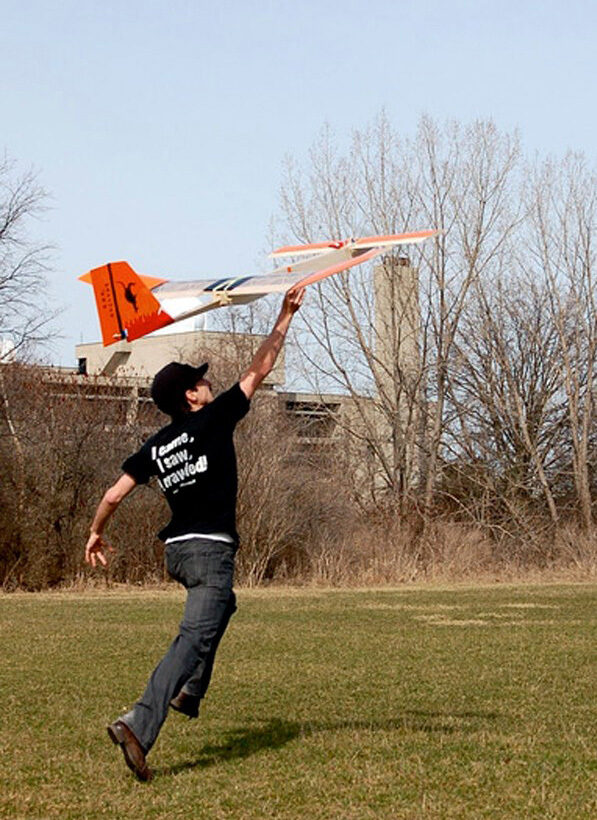
Flyoff launch
At one point, Zingg discovered that Lieutenant Governor David Onley was an aerospace enthusiast, so UTIAS issued an invitation for him to join the flyoff and the lunch. Because the Lieutenant Governor represents the monarch, in this case the Queen, strict protocols had to be followed and were communicated by his office. Then, the day before the flyoff, a security detail arrived to do a sweep of UTIAS. We followed the protocols, but Onley was very low key and enjoyed his visit so much that he came back the next year as well. His presence certainly lent an air of distinction to the event.
Zingg’s vision of community-building extended well beyond current students and faculty. As email and social media technologies expanded, he began strengthening ties with UTIAS alumni and he developed what would become the Industry‑Alumni‑Student (IAS) dinner. Held annually in the Great Hall at Hart House, this event brings together the three groups that form the heart of the UTIAS community. Featuring a prominent speaker each year, the gathering serves as an important forum for students to network, while also creating valuable opportunities for alumni and industry professionals to mentor students.
As with most initiatives Zingg led, the IAS dinner was ambitious. He wanted students to hear directly from leaders in the field. The inaugural 2008 dinner featured Canada’s first astronaut and then Member of Parliament, Marc Garneau, and it was an immediate success. In the years that followed, the dinner hosted an exceptional lineup of speakers, including Apollo 13 astronaut Fred Haise; Boeing’s Blended‑Wing‑Body pioneer Dr. Robert H. Liebeck; Canadian astronaut Julie Payette; NASA technology leader Dr. Robert (Bobby) Braun; Stanford CFD pioneer Professor Antony Jameson; NASA’s Dr. Anita Sengupta, co‑designer of the 70‑foot parachute for the Curiosity rover; and Canadian‑born Rogers E. Smith, who became Chief Pilot at NASA’s Dryden (now Armstrong) Flight Research Center.

David Zingg and Apollo 13 astronaut Fred Haise at the IAS Dinner, The Great Hall, Hart House
Sonia DeBuglio, who served as Director of Alumni Relations for the Faculty of Applied Science and Engineering during Zingg’s terms, observed that UTIAS graduates feel very strongly connected to their alma mater and David Zingg understood and nurtured that bond.
Don Cameron (MASc 7T6), who later graduated from the University of Toronto Faculty of Law and became one of Canada’s leading intellectual property lawyers, has remained an active UTIAS alumnus and regular IAS attendee. Reflecting on the IAS dinners, he calls them a “four‑for: reconnecting with friends and professors, engaging with students and industry, and learning from speakers, always an enjoyable evening with the entire UTIAS family.”
Stephen Colavincenzo (MASc 9T6) and his father, Ovidio Colavincenzo (MASc 6T9) are a rare father and son alumni duo who often attend the IAS dinner together. Ovidio, did his MASc with the legendary Ben Etkin, and Stephen, who works for Bombardier, wears both an alumni and an industry hat.
A frequent visitor to UTIAS and annual guest lecturer in Zingg’s Sustainable Aviation course, Stephen Colavincenzo values the dinners as an opportunity to mentor students: answering questions, offering advice, and providing practical support. Above all, he emphasizes the sense of community and continuity the dinners create, and the reminder that today’s students are, ultimately, the future. Ovidio is amazed at what today’s students are capable of and Stephen agrees, but he does remind his father that when Ovidio did his degree, he used a slide rule, not a computer!
Just as the Colavincenzos delighted in engaging with students, the “student effect” on dinner attendees was widely felt. Industry members and alumni return to the IAS Dinner year after year, and many lasting professional relationships have been formed, some of which have led directly to student job offers.
Guest speakers were not immune to the student effect either. They typically spent part of the event day at UTIAS holding an open student Q&A session, giving students the freedom to ask anything. One of the most memorable sessions was with Apollo 13 astronaut Fred Haise, who was over the moon and visibly energized by his interaction with the UTIAS students.
Most notably, the evenings are remembered for their sense of collegiality, evidenced by guests lingering on to chat while Hart House staff clear away the remnants of the night.
Greater Than Themselves
In 2004, Professor David Zingg was awarded a prestigious Guggenheim Fellowship for his research on environmentally friendly aircraft, clear evidence of what Professor Joaquim Martins calls Zingg’s strong, forward-looking environmental vision, which was apparent long before it became popular. According to Martins, Zingg was influenced by a book on climate change by George Monbiot and he wanted to act on those ideas. Ultimately, these ideas shaped the work Zingg did in aerodynamics and aircraft configurations. Martins notes, “That long-term vision was a defining part of who he was.”
Zingg recognized that air travel was one of the areas that needed urgent systemic change, so when he became Director of UTIAS in 2006, one of his focuses was to implement sustainable aviation as a strategy for the institute. However, he is quick to point out that a director should not dictate what people choose to research. Instead, he notes that “there is a role for collective initiatives where you kind of try to make the whole be greater than the sum of the parts.”
Accordingly, Zingg’s strategy applied more to hiring. He and Martins were already engaged in research relevant to sustainable aviation, and over the next few years, three more professors were hired in areas that could potentially contribute to sustainable aviation.
And then, Zingg developed an international invitation-only workshop on sustainable aviation to which he invited high-level participants from around the world. The overarching intent of the workshop was to “foster dialogue among academia, government, and industry to identify technological solutions for reducing aviation greenhouse gas emissions, with a focus on scientific and technological challenges, research priorities, and collaborative opportunities.”
With students at the heart of most decisions Zingg made as Director, their participation became an integral part of the workshop. Not only did the workshop provide opportunity for UTIAS students to attend high-level talks, they could also interact with the world’s leading participants in sustainable aviation. And the UTIAS “student effect” had great appeal for the invitees.
One of the original participants, Dr Fay Collier, NASA Chief Engineer USAF Blended Wing Body Flight Demonstration, has a long career working at NASA on Environmentally Responsible Aviation. He is a regular attendee of the workshops because he finds them extremely effective, “they are small, well organized, and allow for a lot of interaction between speakers and students. I often take away something valuable that I have learned from the speakers and/or students. I have also broadened my network as I meet people I wouldn’t otherwise.”
Dr Lynnette Dray, Principal Research Fellow in Aviation and Environment at University College London, and Deputy Director of the Air Transportation Systems Laboratory echoes Collier and adds “there have been discussions at the workshop that have provided really useful insights for our work. For example, there was an excellent discussion about technology manufacturers and how they consider specific airports or routes and the constraints those impose when developing aircraft designs. That discussion proved valuable when we began thinking about our systems modelling work and how to incorporate specific aircraft into it. It highlighted the importance of moving back and forth between the idea of networks and the details of aircraft design, and how different aircraft designs may fit differently within particular networks. The way Zingg’s workshop brings everything together provides a wider context that you don’t ordinarily have access to from one workshop. We have also found the opportunities to connect with people doing related work in other parts of the world to be extremely beneficial. It is also valuable to hear perspectives from people at very different stages of their careers, including students.”
Pervez Canteenwalla, Program Lead for the Low Emission Aviation Program (LEAP) at the National Research Council Canada, agrees. He considers the workshop among the best events he attends, surpassing even major international conferences because of the unique exchanges it fosters. The small, in‑person format contributes to this, as well as to a shared sense of working toward something greater than any single organization. As Canteenwalla explains, “there is a sense of working on something really important to the world, and I think Zingg creates that. We give our presentations, but at the end of the day, he holds a panel and asks questions. It becomes about how we, as different organizations, come together to make aviation better and address climate change.”
Sid Banerjee, Senior Aircraft Architect at JetZero and former Technical Expert, Engineering at Bombardier, notes that the workshop’s small, invite‑only format enables candid, in‑depth exchanges among experts in climate science and aircraft design. He emphasizes that this setting encourages collaboration and that the informal, in‑person interactions are essential for building trust and sustaining progress. As Banerjee puts it:
“Together we’re bigger than the sum of our parts. Climate researchers can do as much as they want about climate research, but if nobody applies what they’ve found, it has no impact. And we can design airplanes, but if we don’t know what we’re supposed to design, we’re kind of clueless. But if you bring those two together, suddenly, you get something that is higher value for everyone. And it all starts with the human connection, which is different from writing an e‑mail or even making a phone call. It’s better to be there, have lunch together, tell jokes together. Then you have synchronicity.”
According to Wendy Bailey, Chief of the Environmental Protection Office in Civil Aviation at Transport Canada Government of Canada, it has been a priority for TCCA to attend since the Fourth International Workshop on Aviation and Climate Change in 2014. At times, and depending on the topics to be covered, multiple participants attended and have presented on a few occasions. Bailey has attended five of the last six workshops and definitely finds them inspiring.
“One of the main goals for Canada's participation in the International Civil Aviation Organization’s (ICAO) environment program is to maintain Canada’s value and relevance as a contributing member country. This requires close cooperation and collaboration with key partners. The international workshop attracts leading researchers from organizations around the world. Though Transport Canada liaises with these bodies at ICAO and elsewhere, the workshop provides a unique opportunity for closer collaborations, in a more intimate setting, with key Canadian researchers and industry representatives present. The workshop provides information on recent research and priorities at NASA, academic institutions, and industry stakeholders, which is useful to us in our work.
“We believe the workshop is very valuable: there is no other Canadian international event addressing aviation and climate change. The variety of areas of expertise of the presenters brought together is well-balanced between industry, government, and academia, as well as in the issues to be tackled.
“Most aircraft-producing countries have well established linkages with leading universities to advance aviation environmental protection. Through the International Workshop, UTIAS is able to provide a venue that allows Canada to both learn and share and also creates a forum for the possibility of new or expanded aviation environmental research collaborations. The workshop is reputable and showcases Canada's competent research capabilities.”
Zingg notes that the workshop’s influence has also helped to raise UTIAS’s profile nationally and internationally and has attracted top graduate students interested in sustainable aviation.
Explore the workshops https://www.utias.utoronto.ca/international-workshop-on-aviation-and-climate-change/past-workshops/
The First Course in Sustainable Aviation
In January 2013, Zingg introduced one of the world’s first (if not the world’s first) sustainable aviation graduate courses, AER1315. David Sutton recalls enjoying this course during his MASc because it was unique in bringing together a series of lectures by experts who emphasized, much like the workshop attendees, the interconnected disciplines involved in the design and operation of commercial aircraft.
Then, that same year, with funding from a CREATE grant, Zingg, along with seven other UTIAS faculty members, established the Centre for Research in Sustainable Aviation (CRSA) to address the growing environmental impacts of aviation. As part of the Centre, an emphasis in sustainable aviation, the graduate‑level equivalent of an undergraduate minor, was created. The emphasis comprised AER1315 Sustainable Aviation along with at least two additional courses from a broad range of topics, including reducing aircraft weight and drag, noise reduction, alternative fuels, and more. The goal of the emphasis is to equip graduate students with the interdisciplinary skills needed to develop the next generation of sustainable aircraft.
For four years, the CRSA also funded a Sustainable Aviation summer school that was required for all UTIAS CREATE trainees but was also open to graduate students from other University of Toronto units. The two‑day program provided in‑depth coverage of topics directly related to sustainable aviation.
Green Aviation Research and Development Network (GARDN)
In 2009 Zingg was invited to lend his environmental expertise to GARDN, an initiative formed by Bombardier and Pratt & Whitney Canada that grew to include academia as well as government funding and agencies. This tri-partite organization was formed to coordinate a Canadian project to mitigate the impact of air travel on the environment. Serving simultaneously on the board, chairing the Scientific Committee, and contributing as an active researcher, Zingg helped obtain government funding that extended the project over two five-year terms.
Stephen Colavincenzo, Technical Integrator Bombardier Global 8000, Technical Expert Sr, Engineering, Acoustics and Vibration at Bombardier, and a very early proponent for biofuels, headed the biofuel project that produced one of GARDN’s most visible outcomes – Canada’s first biofuel flight, a milestone that emerged directly from GARDN‑supported research. The project brought together Bombardier, Pratt & Whitney Canada, and Porter Airlines, alongside Canadian agricultural partners supplying the biofuel feedstock, as well as U.S. collaborators and regulators. While earlier biofuel demonstration flights had taken place internationally, particularly in the United States, Canada’s efforts followed closely behind and required extensive work with certification authorities to establish standards for fuel approval and use in commercial aircraft.
All in all, GARDN aligned with Zingg’s personal commitments to sustainable aviation and to Canada. As a project rooted entirely in Canadian industry and research, GARDN represents a genuine contribution to advancing sustainable aviation in Canada.
Reflections on Sustainable Aviation
Looking back over the past seventeen years, nine workshops, nine hires, and all the sustainable initiatives that followed, Zingg acknowledges that while the path has been challenging, the industry’s ambitious net zero target for 2050 drives ongoing research. He explains that the long learning curve reflects the nature of the problems themselves, noting that sustainable aviation challenges are both hard and important: “Some things are important, so we work on them for some years, and they’re solved. Other things are hard, but they’re not that important, so we don’t really commit the resources, we kind of chip away at them for decades. But this is both hard and important.”
Although it is now ten years since Zingg’s Directorship ended, he observes that while it took some time for some areas of research to evolve into the sustainable domain, things have really started to coalesce, “I think more than ever now you can really say there's a lot of sustainable aviation research going on at UTIAS.”
Etcetera
It is evident that the ten years of Professor David Zingg’s Directorship were dynamic years. Many things of note happened, too many to mention in fact, but there are some that deserve honourable mention.
Start@UTIAS
In 2014, UTIAS alumnus Francis Shen made a $1‑million donation to establish and support an entrepreneurship program at UTIAS called Start@UTIAS. More than a benefactor, Shen ran the program alongside his former classmate David Zingg, providing students with direct mentorship from a highly successful entrepreneur. Start@UTIAS encouraged graduate students to translate their research and technical skills into viable startups by offering legal and accounting workshops, networking opportunities, seed funding, and hands‑on mentorship from Shen and Zingg. Through the program, a number of successful companies were launched, including Kepler Communications, MedChart, and TeaBot. Ultimately, Start@UTIAS merged with the Hatchery.
Shen was the founder, former Chairman and Co‑CEO of Aastra Technologies Ltd, a global enterprise communications company that operated in over 100 countries before merging with Mitel in 2014. Named Ontario’s 2000 Entrepreneur of the Year in Technology and Communications by Ernst & Young, Shen has served on numerous prominent boards including the UTIAS Advisory Board.
Fun fact: in the second film of the Swedish trilogy Girl with a Dragon Tattoo, Aastra appears on the list of Lisbeth Salander's assets.
The Flights Heard Round the World
In the wee small hours of the morning on August 2, 2010, a call went out to let people know that conditions were good to go. Volunteers, including undergraduate engineering students, as well as graduate students from various UTIAS research groups, headed to Tottenham, Ontario to lend a hand to UTIAS students Todd Reichert (PhD 1T1) and Cameron Robertson (MASc 0T9). The pair, with financial support from UTIAS, the Faculty of Applied Science and Engineering, and Bombardier, to name a few, had been labouring for months on Snowbird, a human powered ornithopter.
With nothing but human power, Reichert, who had shed 18 pounds from his already lean frame, was set to pilot the 94 lb aircraft that had a wingspan comparable to that of a Boeing 737. As the aircraft was towed along the field, Reichert pumped the pedals with growing speed. The wings began to flap, and Reichert released the towline as he rose into the air. Under the watchful eye of the vice-president (Canada) of the Fédération Aéronautique Internationale (FAI), the world-governing body for air sports and aeronautical world records, Reichert sustained altitude and airspeed for 19.3 seconds over 145 metres at an average speed of 25.6 kilometres per hour and achieved the first ever Human Powered Ornithopter flight. Major news outlets around the world reported on this remarkable achievement. Watch the beautiful record setting video:
In 2013, the dynamic duo of Reichert and Robertson, again with a team of volunteers, went on to win the Igor I. Sikorsky Human Powered Helicopter Competition, which was believed by most to be unwinnable. The $250,000 challenge was established 33 years earlier in 1980 by the American Helicopter Society (AHS) International.
Then from 2015 – 2016 Reichert and Robertson led the team that designed the fastest human-powered bicycle which broke the human-powered speed record in 2015 at 86.65 mph. They incremented that record four more times culminating with 89.59 mph in 2016, all with Reichert in the rider’s seat.
Downsview Aerospace Innovation & Research Hub (DAIR)
In 2010, a representative from Centennial College invited Professor David Zingg to participate in discussions regarding the establishment of a hub for aerospace innovation and research at Downsview Park. Agreeing to join Centennial in the early stages of shaping the hub,
Zingg proposed the name Downsview Aerospace Innovation & Research (DAIR) and helped assemble a group of aerospace companies and government representatives. He also brought senior University of Toronto leaders to the table to assist in negotiations with government.
The original concept for the Aerospace Innovation Hub at Downsview Park included Bombardier, UTIAS, Centennial, an aerospace innovation centre, and an aerospace museum. Although this ambitious vision did not fully materialize, Centennial successfully relocated its aerospace program to Downsview Park, and DAIR has since emerged as a thriving aerospace innovation hub. Today, it supports initiatives such as the DAIR Green Fund, which enables collaborative sustainable aviation R&D projects led by small and medium‑sized Ontario aerospace companies.
The UTIAS Advisory Board
Zingg also created an Advisory Board for UTIAS. Comprised of senior level industry members and alumni, the group provided valuable advice and resulted in strengthened ties between UTIAS and industry.
The industry members on the board were very valuable in providing insights into what their respective companies were planning, advice on collaboration, and assistance in connecting Zingg with various internal people as needed. Some of the initiatives that ultimately went forward included collaboration and research funding for UTIAS professors, and the first funded Industrial Research Chair.
Industrial Research Chair
In January 2012, Dr. Sam Sampath was named to the NSERC/P&WC Industrial Research Chair in Aviation Gas Turbine Combustion, Emissions Research, and Design System Optimization at UTIAS. According to U of T Engineering News, he joined UTIAS Professors Gülder, Groth, and Steinberg, in creating the preeminent research group in Canada, and one of the leading groups worldwide, focused on reducing the environmental impact of aviation through gas turbine combustion and emissions research.
Prior to joining UTIAS, Dr. Sampath was a senior combustion researcher at Pratt & Whitney Canada. He held 14 U.S. patents and was a Fellow of the Canadian Academy of Engineering. He served on numerous government and industry organizations. His environmental impact studies contributed to the IPCC’s joint receipt with Al Gore of the 2007 Nobel Peace Prize.
Hockey Legend
Ken Dryden was a legend, and you didn’t have to be a hockey fan to love him. Known for his articulate post-game interviews, his brilliance, his love of education, and his integrity, Dryden went on to become an MP, and UTIAS was lucky enough to be in his riding. In April 2010 when Professors Emeriti from UTIAS received the Pioneer Award from the Canadian Air and Space Museum for their critical contribution to the rescue of Apollo 13, Ken Dryden read a Standing Order 31 in the House of Commons to offer his congratulations.
Shortly after reading the Standing Order 31, and much to the delight of the hockey-loving students at UTIAS, not to mention the staff and faculty, Mr. Dryden arrived for a tour of UTIAS. Towering at six foot four, his physical presence was as imposing as his reputation. He was a gracious and curious guest who spent time with Zingg after the tour asking questions about the ongoing research at the institute.
And Now for Something Completely Different
Something you might not know about Professor David Zingg is that he has a very deep passion for music – but not just any music. David Zingg grew up during a time that could be defined à la McLuhan as a musical frontier: a time when cultures collide and create something transformative, something magical. The 1950s, 60s, and 70s marked such a frontier when all forms of music – rock, classical, blues, jazz, gospel, country, and folk mixed and mashed together to create some of the most radical changes in the history of music. It is no surprise that these radical changes occurred alongside tremendous social upheaval, including a critical period in the civil rights movement. Here, we are interested in a very important ingredient that, although well documented, has historically been ignored.
Award‑winning journalist Vince Dixon puts it succinctly: “Black people are either directly or heavily responsible for the creation of almost every major music genre in America.” That truth extends well beyond the U.S. and is central to the musical frontier of the 1960s and 70s. The Beatles, for example, openly acknowledged on many occasions the heavy influence of Black music on their music, and they recorded multiple credited covers of Black artists on their early albums. Led Zeppelin, by contrast, became famous for drawing heavily on Black musicians’ work without giving credit, though, in the end, when taken to court, they did pay for it.
This is not meant to be a treatise on this crucial history, but Dixon has documented it in a user-friendly way, so if you are a music lover, or even if you are not, Dixon's work is well worth exploring. And this truth matters to our story.
When young David Zingg began listening to music, he found himself drawn to a particular sound. It was such a compelling sound that he started intentionally looking for that sound. It turned out that his ear was tuned to the roots of what he later recognized as the music that shaped the entire musical frontier: African American music.
Unsatisfied with the limited “roots” music available on the radio, the teenage Zingg could often be found haunting the vinyl bins at Sam the Record Man, a large, iconic two‑storey Toronto record shop, and the only place he could find the music he had come to love. There, he discovered gospel, blues, jazz, and rhythm and blues records that did not just satisfy his ear but drew him in further with their stories.
What happened next probably won’t surprise you. Zingg began researching the music he loved, reading anything he could get his hands on that helped him understand and appreciate this music even more. In the process, Zingg came to understand that African American music was indeed foundational to not only most music that emerged from the music frontier era, but to the music that came before as well.
Zingg’s passion for this music never waned. It is part of who he is, and it became a lifelong course of study so that he now has what could be described as an encyclopedic knowledge of Black music.
Now, I’m sure you’re all wondering who Zingg listens to. When asked to name favourite examples across several categories, he prefaced his response by noting how difficult the task had been and stressing that what he provided was not a “best of” list; it is simply a list of some of his favourite musicians.
With that said, here, for your listening pleasure, is a list of remarkable musicians curated by Professor David Zingg:
“Jazz: my three favourites are Hank Mobley, Johnny Hodges, and Illinois Jacquet
Blues: I narrowed this down to four: John Lee Hooker, Junior Wells, Elmore James, and Otis Rush
Gospel: my two favourites are the Soul Stirrers and the Sensational Nightingales
Reggae: Toots Hibbert is my favourite, the next four would be Bob Marley, Burning Spear, Dennis Brown, and Sound Dimension
Artists from countries in Africa: Ali Farka Touré, Djelimany Tounkara, Bombino, Manu Dibango, and several from Ghana and Nigeria
Finally, Soul: I couldn’t get this below eleven. Otis Redding is number one, and the rest are in no particular order: Aretha Franklin, Marvin Gaye, Etta James, Stevie Wonder, Ann Peebles, Ray Charles, Irma Thomas, Sam Cooke, Mavis Staples, Bill Withers (honourable mentions to Al Green, Sam and Dave, and Wilson Pickett)
And an honourable mention to Professor Longhair, who doesn’t fit nicely into any of the above categories!”
Have fun exploring these remarkable musicians! BTW here’s a fun fact, Professors Zingg, Groth and Grant had a band when they were doing their grad work. As it turned out, they kept their day jobs.
For the Love of the Team
It’s Saturday morning, and as he does every Saturday in the fall, Zingg is heading out to Mississauga for a game with his touch football team in the literally named Metro Toronto Fall Touch Football League. He looks forward to these games not because they always win – they don’t – but because, as Zingg puts it, " I can’t throw as far as I once could, but I have an amazing group of teammates, and although it has been a few years since we won a championship, we do win a few games every year.”
Always the quarterback, Zingg loves playing football. He first started playing at age 14 and has played in one form or another ever since, except for the odd season when he was injured (yup, overuse injuries that are common amongst quarterbacks). He describes his football career as something of an ongoing cycle rather than a straight path. Zingg “semi-retired” a couple of times but was always pulled back in by the familiar call of the game: a request for a quarterback. Laughing, he said that being the quarterback suited him perfectly because he does not run fast enough to play any other position.
Zingg has played on several different teams over the course of his career, each made up of players of a similar age, so they aged together over the years. However, his current team, the Purple Titans, which formed about eleven years ago, is a bit different.
Zingg explains, “What happened was that a couple of people started bringing in younger players to fill up the roster and give us more speed. Then they brought friends, and those friends invited more friends. Gradually, some of the older players retired and were replaced by younger people. Now, we only really add young guys. The older players just keep playing until they can’t anymore.” Personally, Zingg hopes to follow in the footsteps of “a legendary quarterback named Tommy Calhoun, who played until he was 78,” so he still has a ways to go.
Now Zingg is on a team with a “few old guys and a bunch of young guys,” with an age span ranging approximately from 30 to 70 years old, making it a very different mix, and Zingg loves it. They are a group of friends that show up in Mississauga every Saturday in the fall because they love playing the game together.
As Zingg puts it, "If there’s one thing to say, it’s that the camaraderie is more important than winning. Occasionally we win, but the camaraderie is constant.”

The Purple Titans 2023
“Those who never change their minds, never change anything.”
— Winston Churchill
Professor David Zingg is a person with a vision, so it is not surprising that he was the one who wrote UTIAS’s mission and vision statements during the previous Director’s era. You could say that he had a head start on becoming Director because of his nature and his experience. When asked, Zingg says that about half of his vision was developed before he became Director and half after. He also notes that his “vision” evolves and continues to evolve. This is a real insight into a strength that is important for a leader because it implies flexibility in thought based on new evidence, experience, and/or insight.
For example, “Ironically, one of the ideas that I promoted strongly under the previous Director was that we stay true to aerospace and not branch out into a wide range of areas. I felt at the time that we would lose our identity as an aerospace institute that way, which is what makes us unique.
“I say ironically because I then steered UTIAS into robotics, but I don’t think that is contradictory. We do not dabble in robotics, that is, we have a critical mass of researchers, and we grew in size, so our aerospace component did not actually shrink much. Also, there is just so much intersection between aerospace and robotics, especially through autonomy, as exemplified by Professors Liu, Waslander, and Barfoot.”
Zingg is widely regarded as passionate and principled, qualities that align with his personal values and help define a strong leader. These qualities informed his approach not only to the directorship of UTIAS, but also to his broader work beyond the institution. Pervez Canteenwalla (who you met in the workshop section) notes that Zingg serves on the board of the Aerospace Research Center, a role in which the same qualities are unmistakable, “The passion he has for Canada and for the industry comes through, as does his drive for the best.”
And Stephen Colavincenzo recalls that while working together on GARDN, Zingg, who was the Chair of the Scientific Committee, ensured the program operated ethically and that rigorous standards were applied in evaluating projects. With multiple industry, academic, and government partners involved, Colavincenzo notes that “conflicts were inevitable, but Zingg’s leadership kept transparency and accountability at the top of all participant’s minds given its responsibility to public funders and auditors.” As Colavincenzo puts it, “Zingg is an extremely principled man with a very strong moral compass.”
It is evident that Zingg is driven to do the best, to always aim higher. I was privileged to work alongside him during his ten years as Director and repeatedly witnessed that he wanted UTIAS students to experience the best that UTIAS could offer. As Stephen Colavincenzo observed over the many years that he has known Zingg, “He loves his research, he loves his stuff, but he cares about his students.” And “his students” were all the students at UTIAS.
When Professor David Zingg completed his terms as Director of UTIAS, he was named a University of Toronto Distinguished Professor of Computational Aerodynamics and Sustainable Aviation. “The Distinguished Professor Award recognizes individuals with highly distinguished accomplishments and those who display exceptional promise.”
A scholarship funded through donations by a number of the Advisory Board members was established in Zingg’s name to commemorate both his contributions as Director from 2006 to 2016 as well as his “contributions to the field of sustainable aviation as a researcher educator and policy maker.”
If you are beginning to think that Director David Zingg was a bit of a superhero, you might not be wrong...
Director Dave Saves the Day!
One day, the Facility Manager, Jeff Cook, and I were in the Director’s office. Just outside that office is a set of double doors leading outside. These are uneventful doors used only for fire drills. But this day was different. We heard a sound we had never heard before at UTIAS. It was a small meow, a persistent small meow. Being three cat lovers, we abandoned our “important discussion” and rushed to the doors.
There, cowering in the recessed entrance and meowing urgently was a little ginger kitten. We were discussing what further actions might be necessary when suddenly a fox appeared coming around the corner.
Before Jeff or I could process what was happening, Director Dave moved with superhero speed and in one incredible fluid, lightning fast motion, he threw open the door and deftly scooped the cat to safety just as the chop-licking fox lunged.
We exhaled in amazement as the fox glared at us through the glass in disappointment and retreated in defeat. Director Dave stood there triumphantly, cat in arms, the unexpected action hero!!
I guess you are all wondering what happened to this almost-a-meal kitten that Director Dave saved. Well, Jeff, resident cat owner and unabashed kitten lover, took the eight-lives-left cat to a rescue shelter and we really want to believe that the kitten’s luck prevailed and it found a good home.
In a recent interview, Professor David Zingg stated that “one of my biggest single accomplishments as Director was rescuing that cat from the fox!”
And In the End
Ah, but a man's reach should exceed his grasp,
Or what's a heaven for?
— Robert Browning, “Andrea del Sarto”
David Zingg aims high. As Director, his goals were lofty, and he worked tirelessly with passion and dedication to achieve a great deal. He also made his aspirations public in his Director’s message, published on the UTIAS website:
“For the broader community, including industry, government, academic collaborators, and alumni, this website provides evidence that UTIAS remains firmly committed to its objective that Ontario, Canada, and the global community will benefit scientifically, socially, and economically from advances in research and education in aerospace science and engineering at UTIAS. It is our mission to pursue nationally and internationally recognized excellence in the education of students for research and leadership positions, to discover and disseminate new knowledge through research and scholarship, and to apply this knowledge to the benefit of society.”
His vision and sense of responsibility extended beyond the institution itself, and society has indeed benefited, particularly from his work in sustainable aviation.
A new director appointment was in the offing when I interviewed Professor Ömer Gülder in September 2025, and he ended the interview by saying “If you asked me who I would like to see as the new director, I would say David Zingg. He accomplished a lot. He made that institute. It was a very dynamic time.”
Questions? My name has changed, but my email remains the same: joan.dacosta@utoronto.ca